Attempting the South Face of Washington Column
Grade: 5.8 C1
Time: 2 days
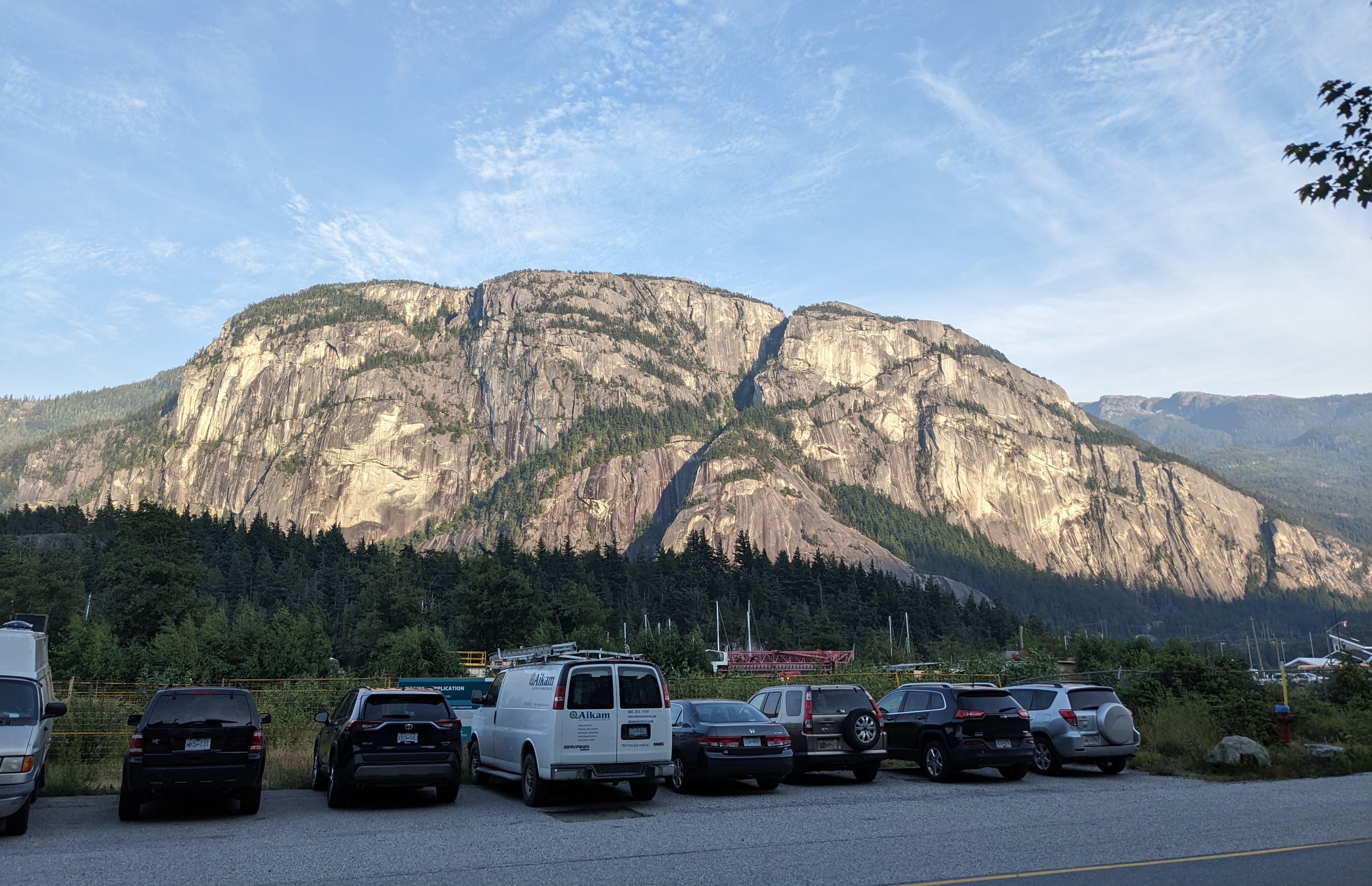
Washington Column is a rock column in Yosemite Valley, standing 1000+ feet high off the valley floor. The South Face of Washington Column is a popular climb for “big wall” climbing, which typically means needing to use techniques such as aid climbing, hauling, and sleeping on the wall.
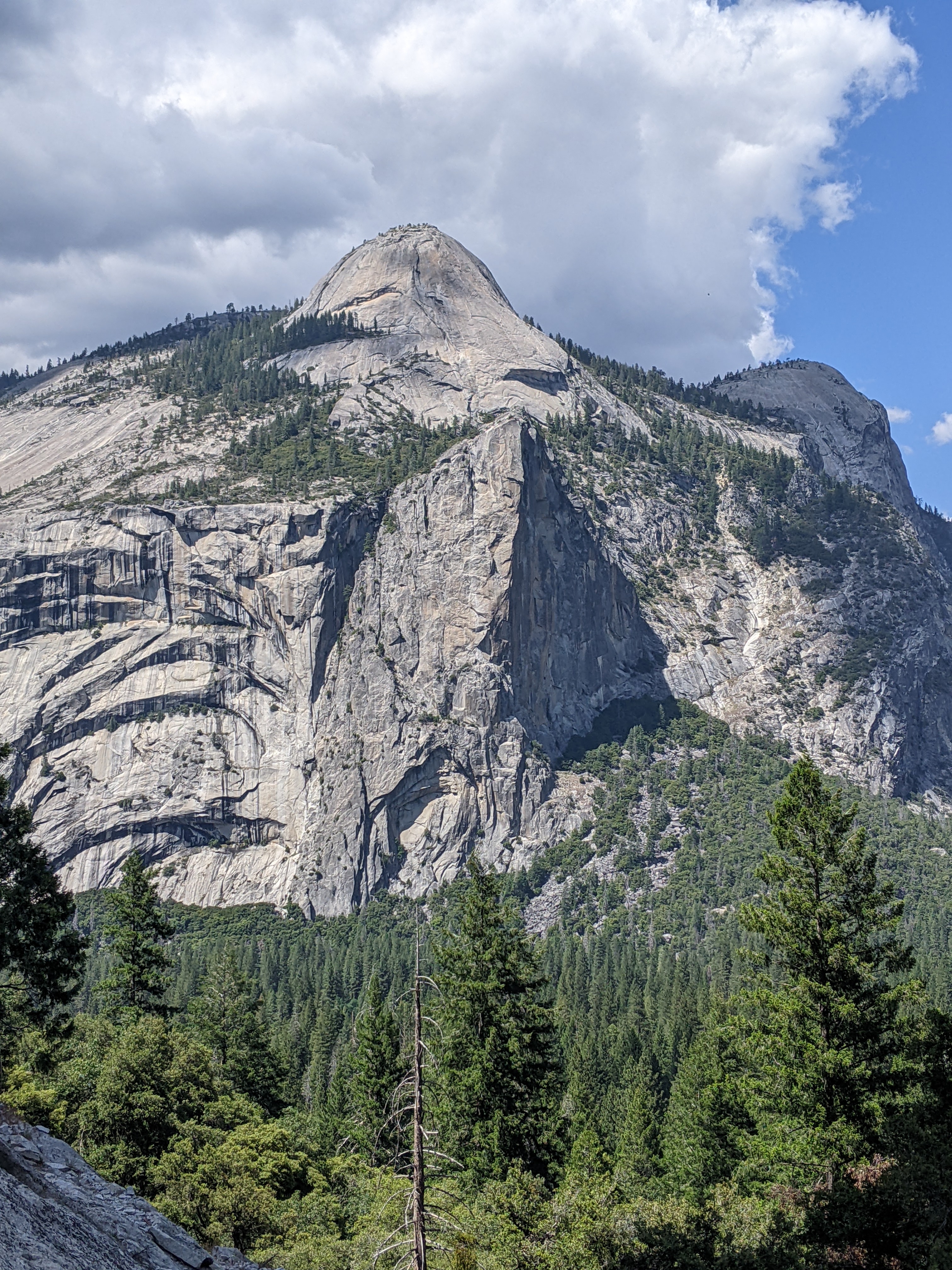
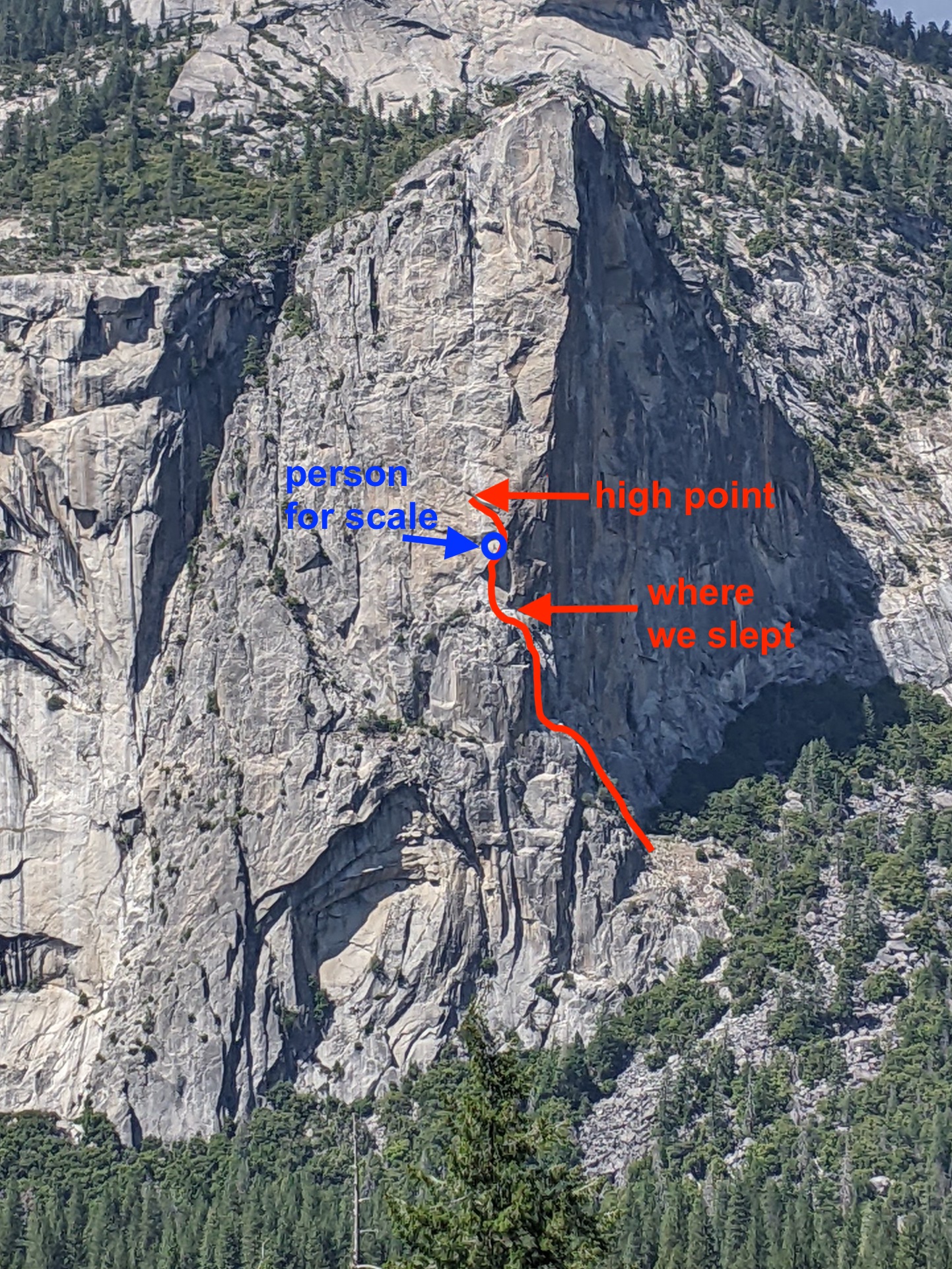
Right: My attempt at annotating our route, no promises on accuracy.
Day 1
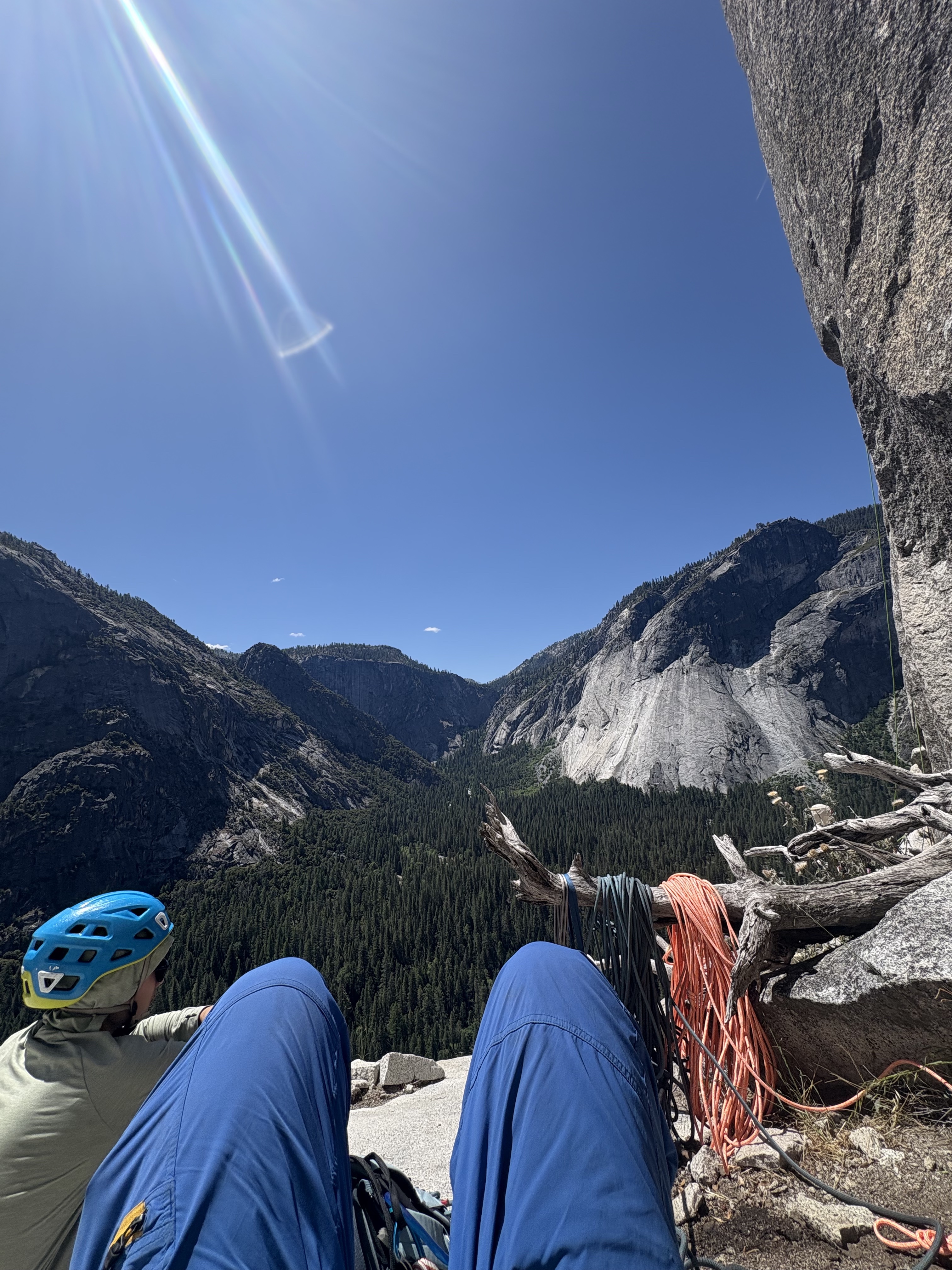
On the night before the climb, Chris and I drove to Yosemite from SF, self-registered for a big wall permit, and camped in the valley backpacker’s campground. This was especially convenient as the backpacker’s camp is right by the start of the approach to the column. I could even see Washington Column from my tent.
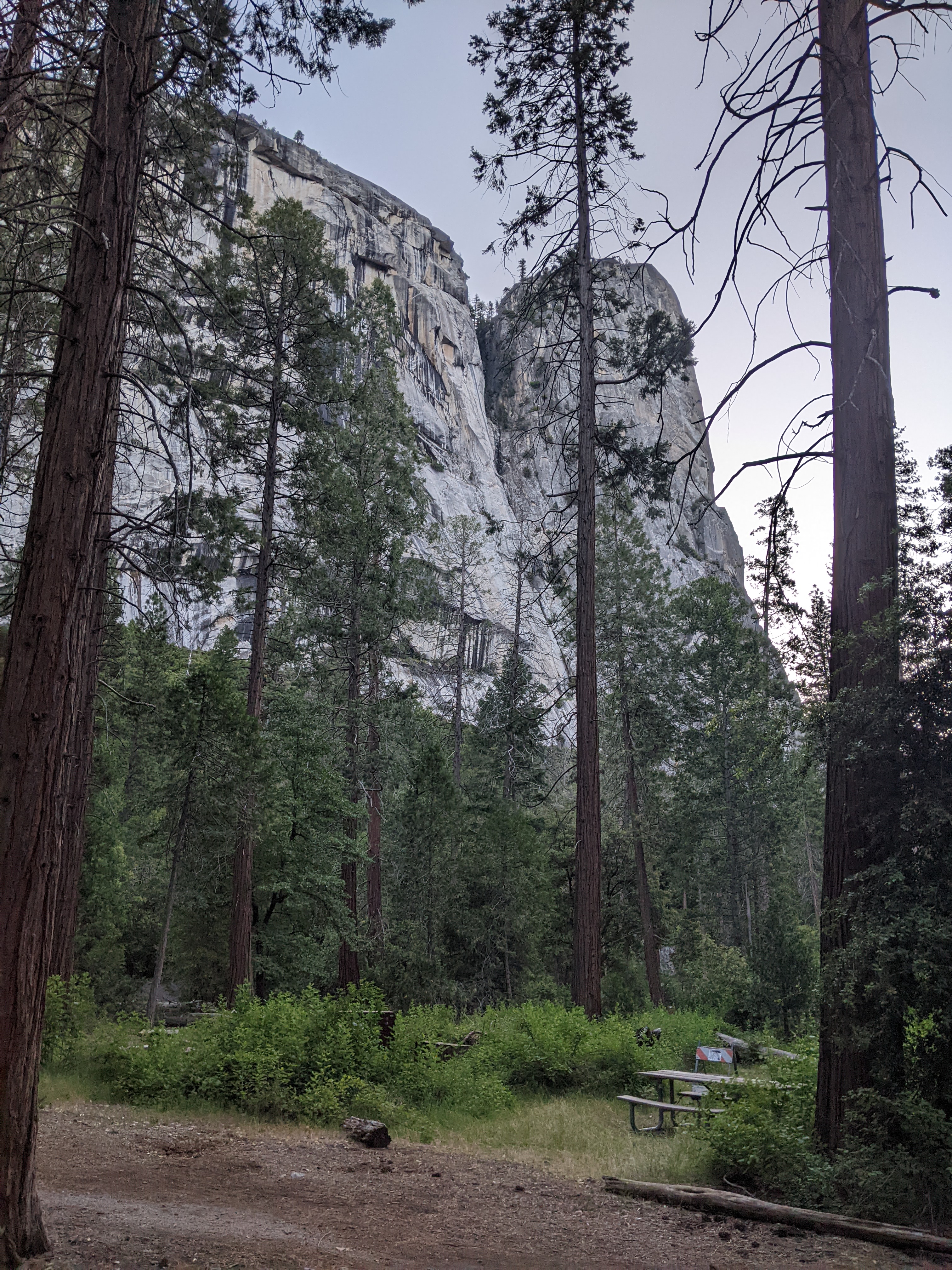
The approach was not too long, but made harder than normal due to the amount of weight that we needed to carry. I carried the haul bag with all of our overnight gear, about 2 gallons of water, and food. Chris carried a backpack with a 70m lead rope, 70m haul rope, and lots and lots of climbing gear (2-3 sets of cams, totems, offsets, and nuts). We didn’t have a scale to weigh the packs but I’m guessing we had something like 40 pounds each.
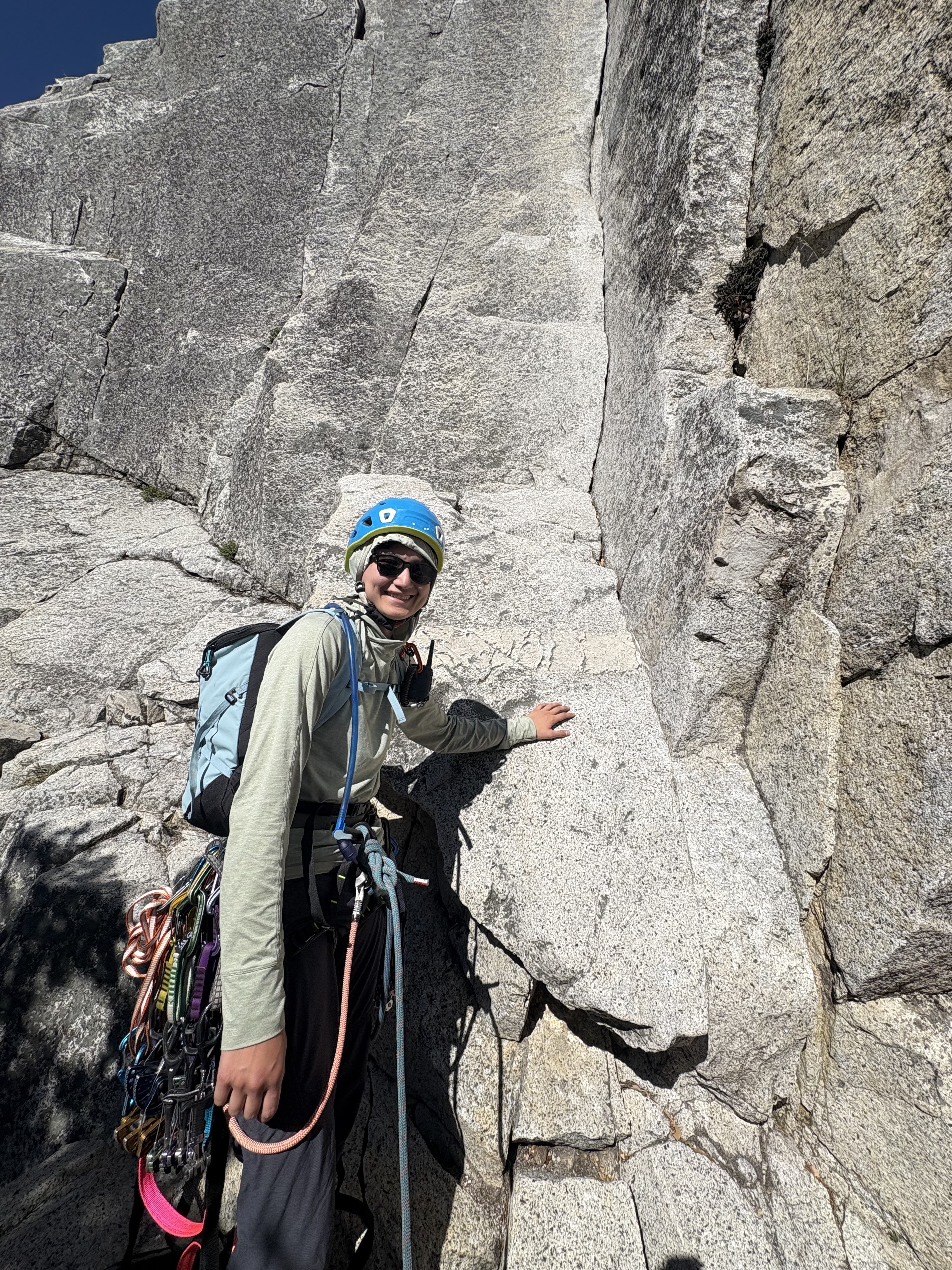
We reached the base of the climb. We had to wait a bit for a party ahead of us to finish climbing pitch 1 before we could start. Then, I racked up and got ready to start climbing. Pitch 1 is a 5.8 pitch so I mostly free climbed it. At the top of pitch 1, I fixed the lead rope for Chris to follow on, and setup a haul system for the haul bag. After Chris and the haul bag got up, we had to wait for a while again, so we took a short nap on the ledge.
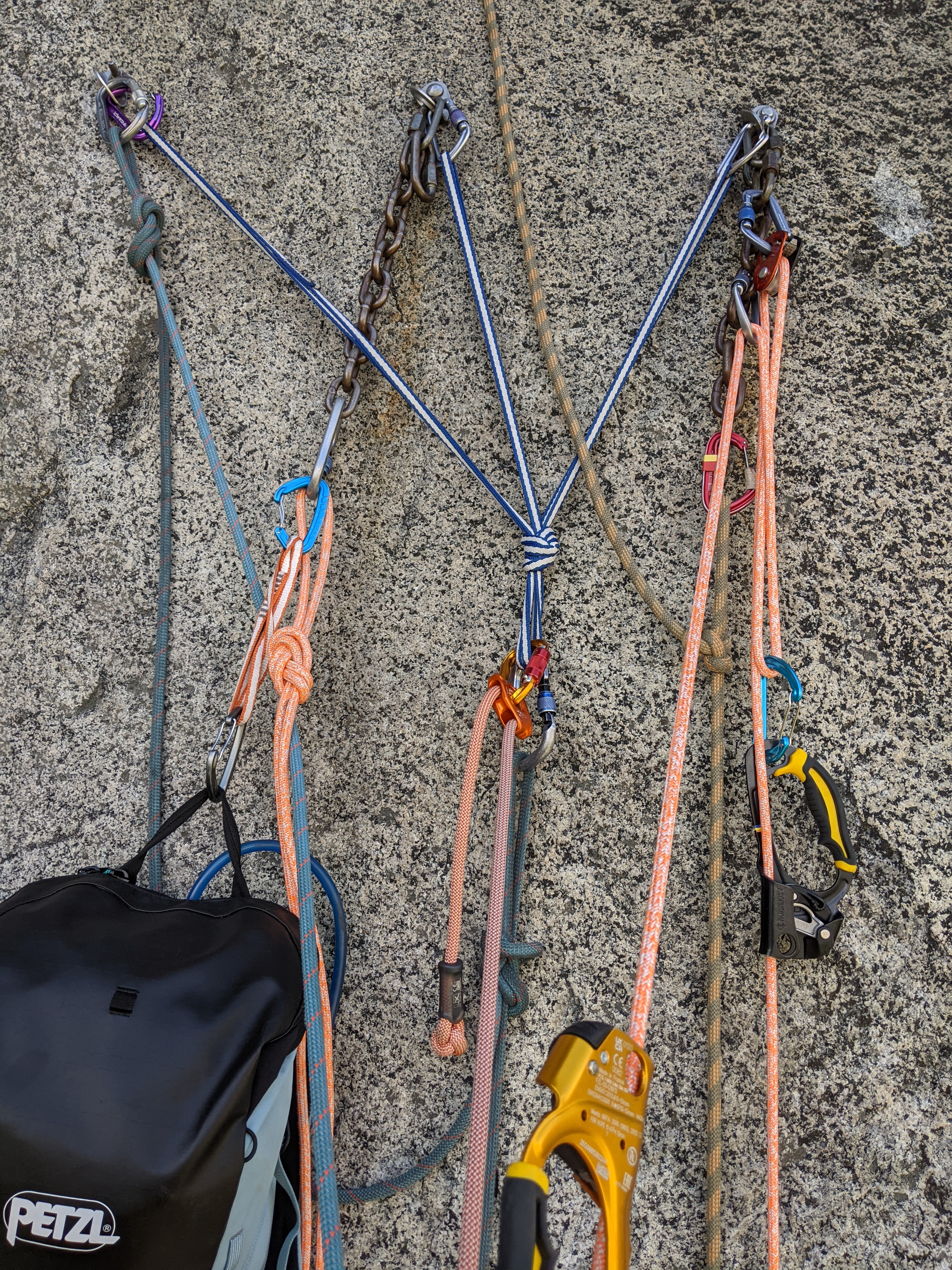
I started climbing pitch 2, which is a C1 pitch. “C1” is an aid climbing grade, with C0 being the easiest and C1 being a slight step up from C0. C1 typically requires the use of aid ladders. Aid climbing is quite different from free climbing. When free climbing, you are using the rock for handholds and footholds, with the gear being used only as protection in the case of a fall. When aid climbing, you place a piece of gear above you, weight it, stand up on it (with the ladder), and repeat. This technique allows you to ascend walls which are much harder than you could free climb.
Near the start of pitch 2, I took a small fall while trying to high step in the ladder, which resulted in a big bruise on my left leg. It was fine other than being bruised, and I continued up shortly after.
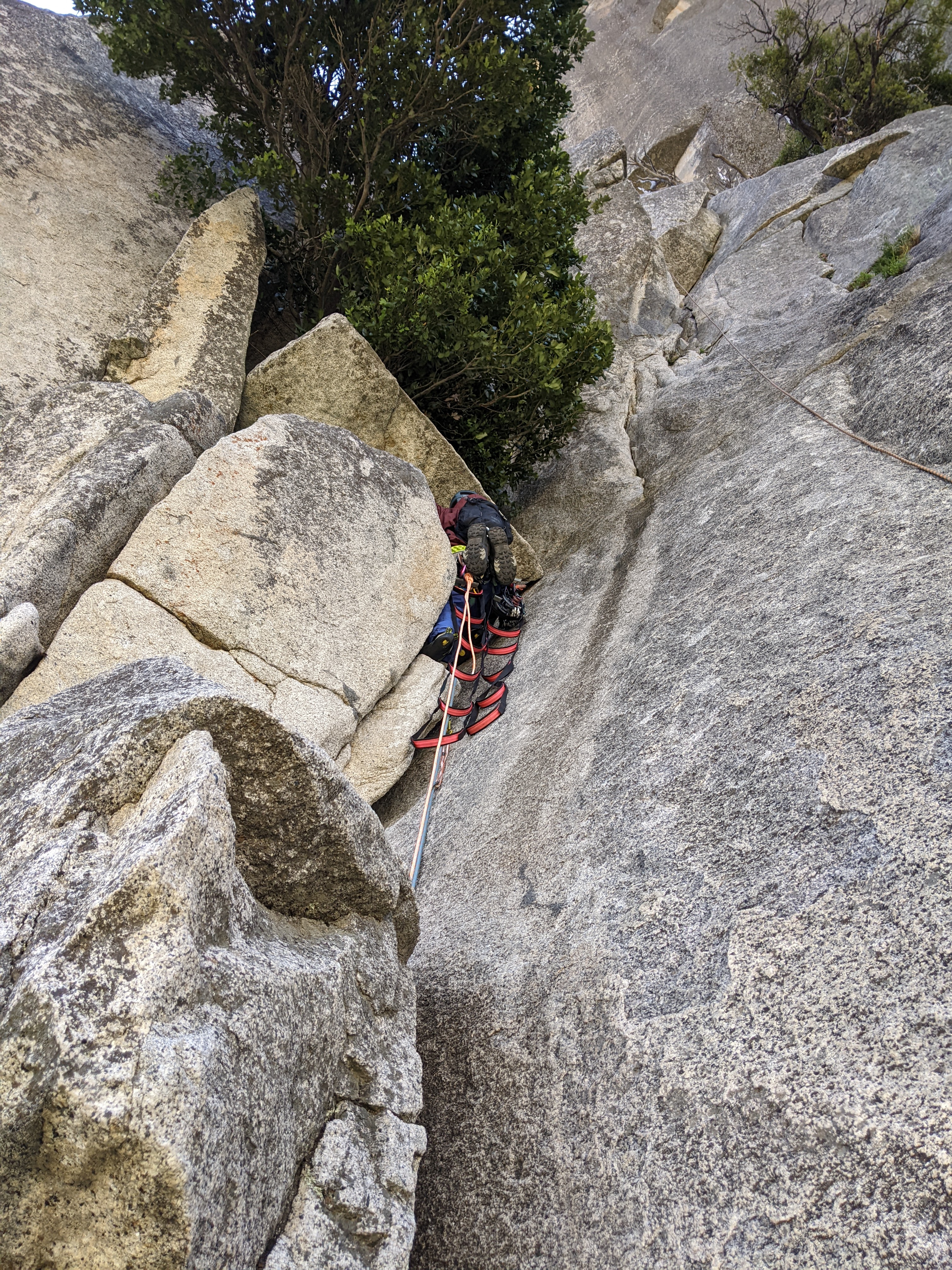
Chris took the lead on pitch 3 since I was tired of hauling. Pitch 3 is another 5.8 pitch, so we went faster again with mostly free climbing.
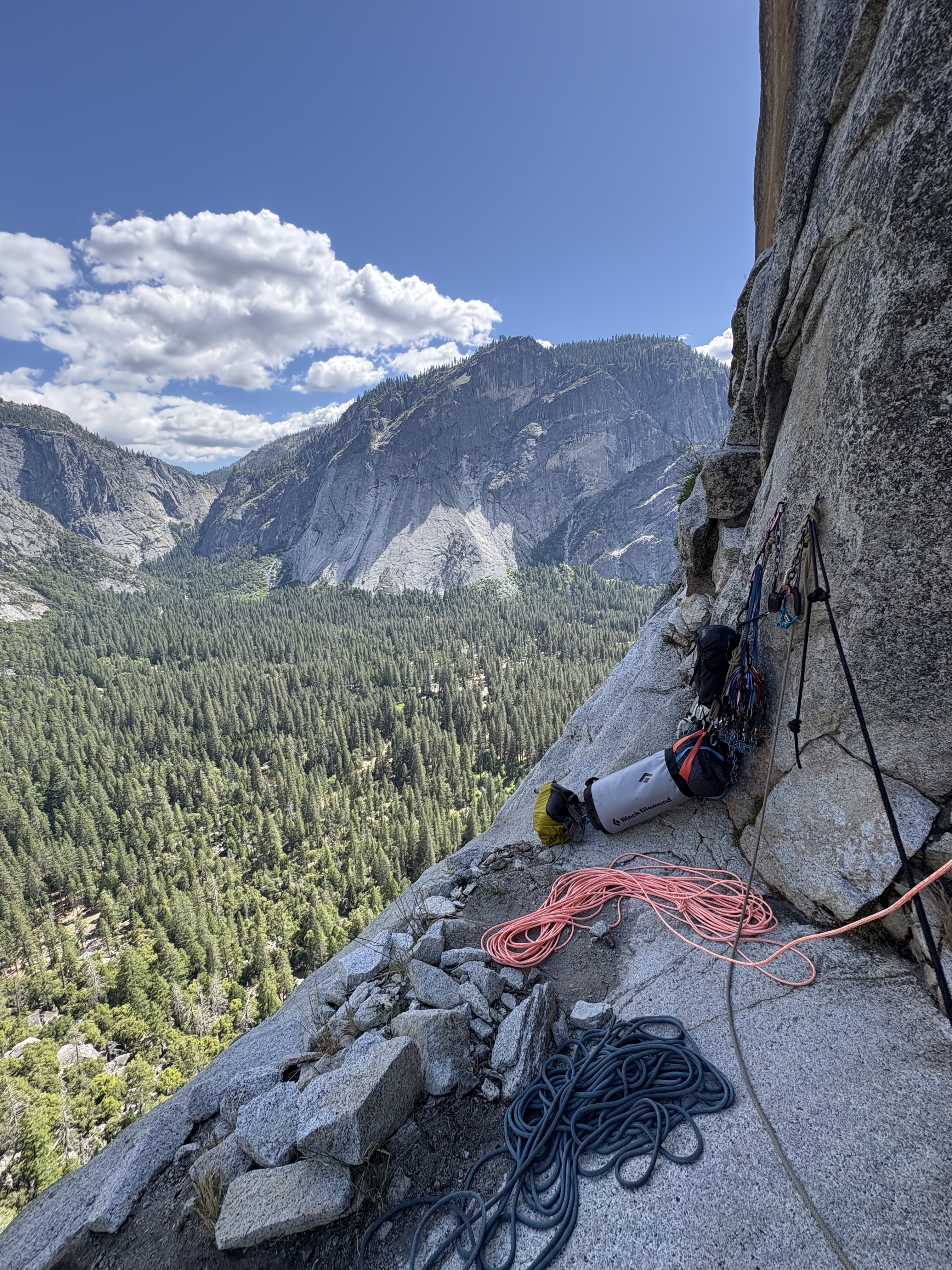
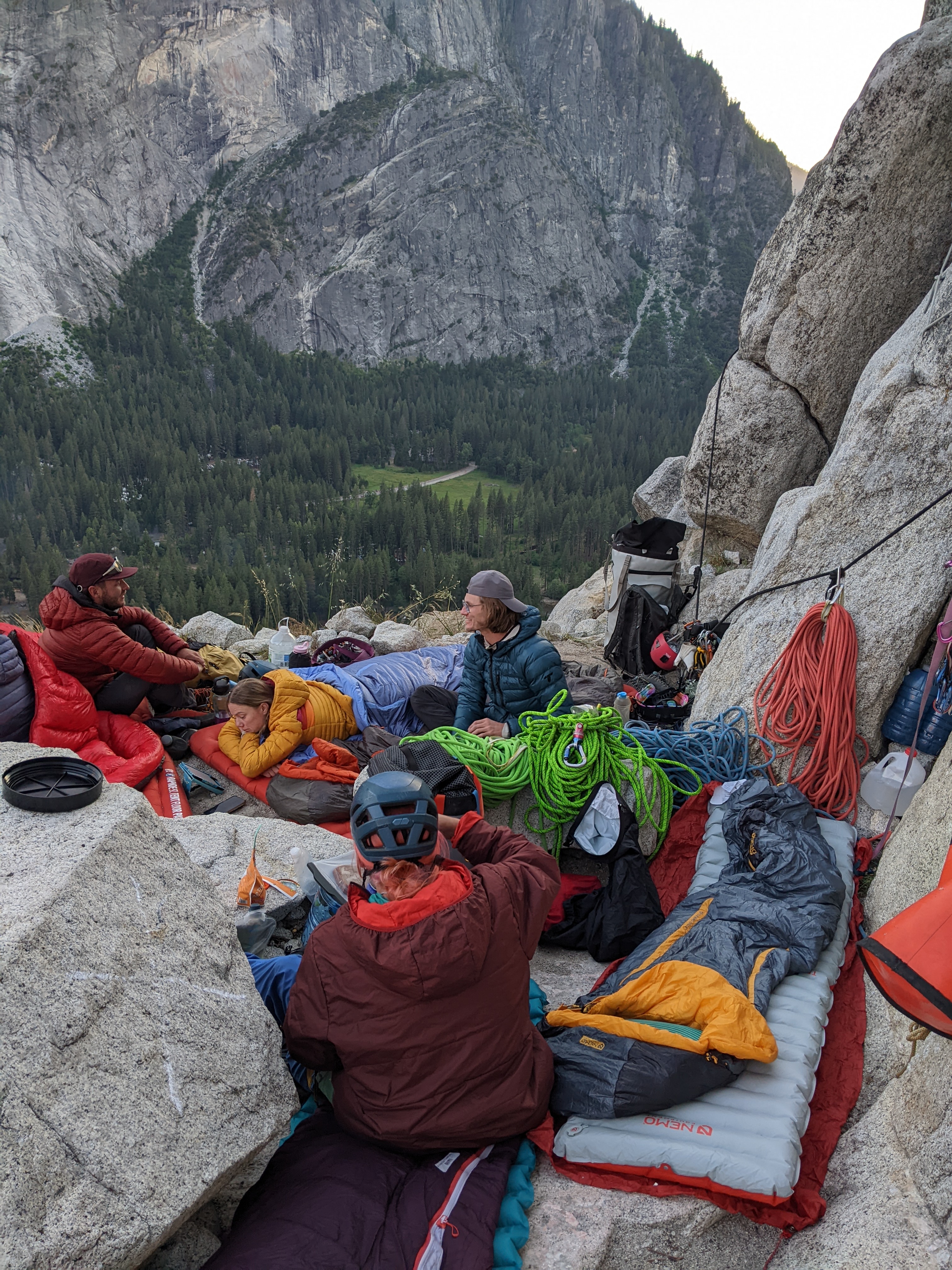
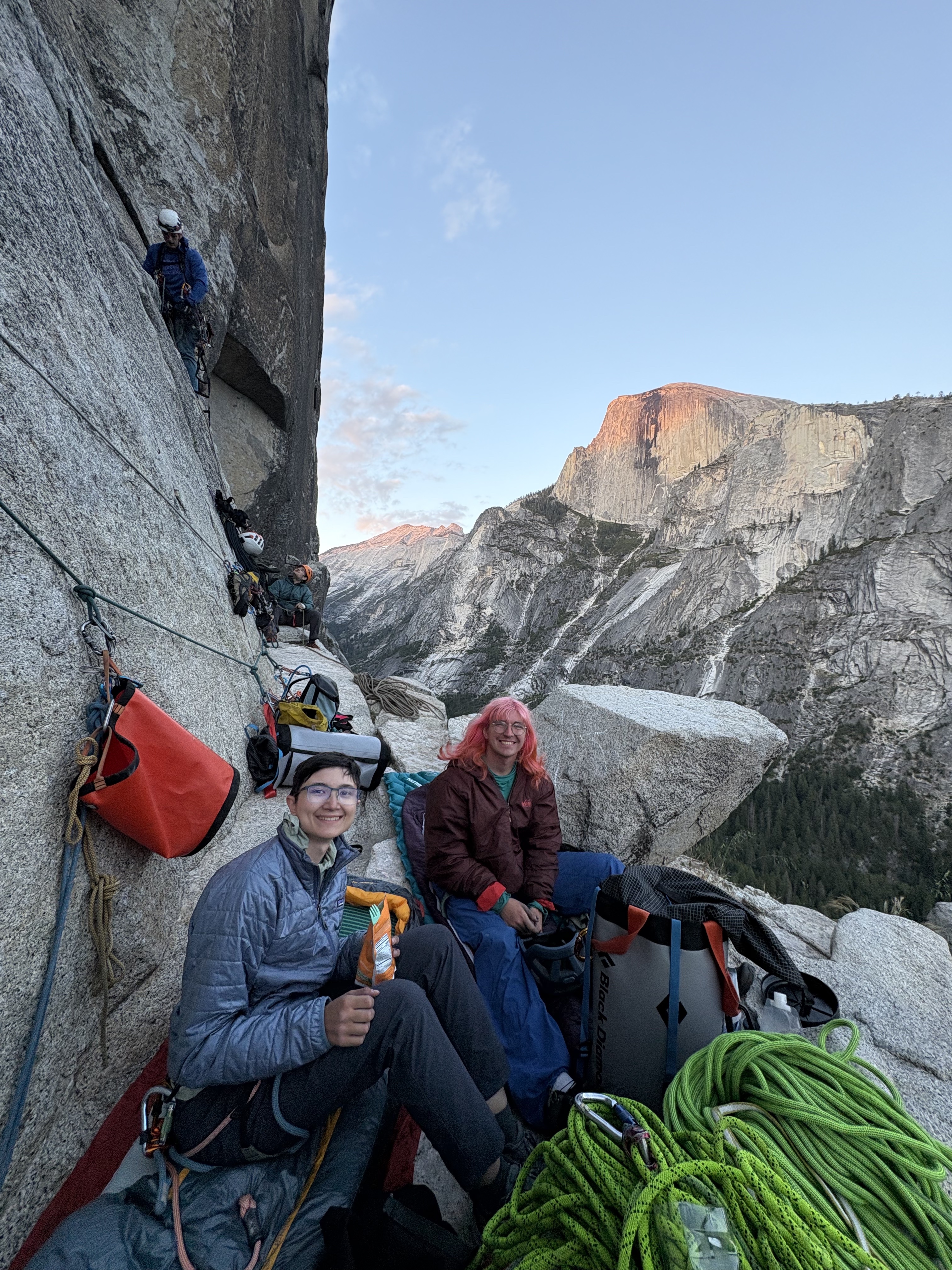
At this point, we had made it up to Dinner Ledge! This is a big ledge where we were planning to sleep for the night. The ledge has fixed lines attached to bolts running across it, so you can stay clipped in when traversing it and to clip your gear in. There’s a big flat area with space to camp. We set up our sleeping bags and sleeping pads and chatted with some of the other climbers who were up on the ledge with us.
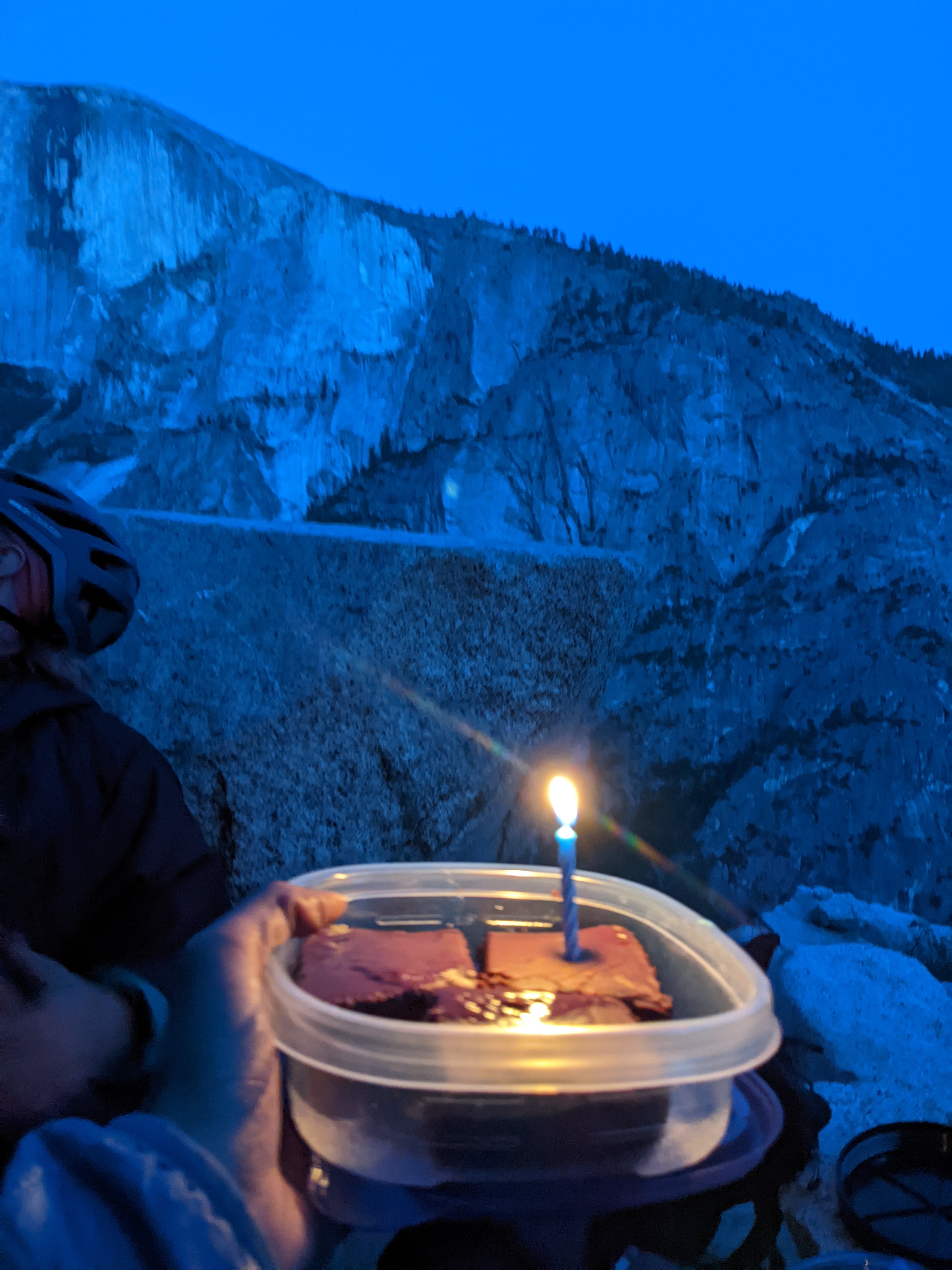
It was the night before my 26th birthday, so I brought up some brownies to share with everyone. After that, we went to sleep!
Day 2
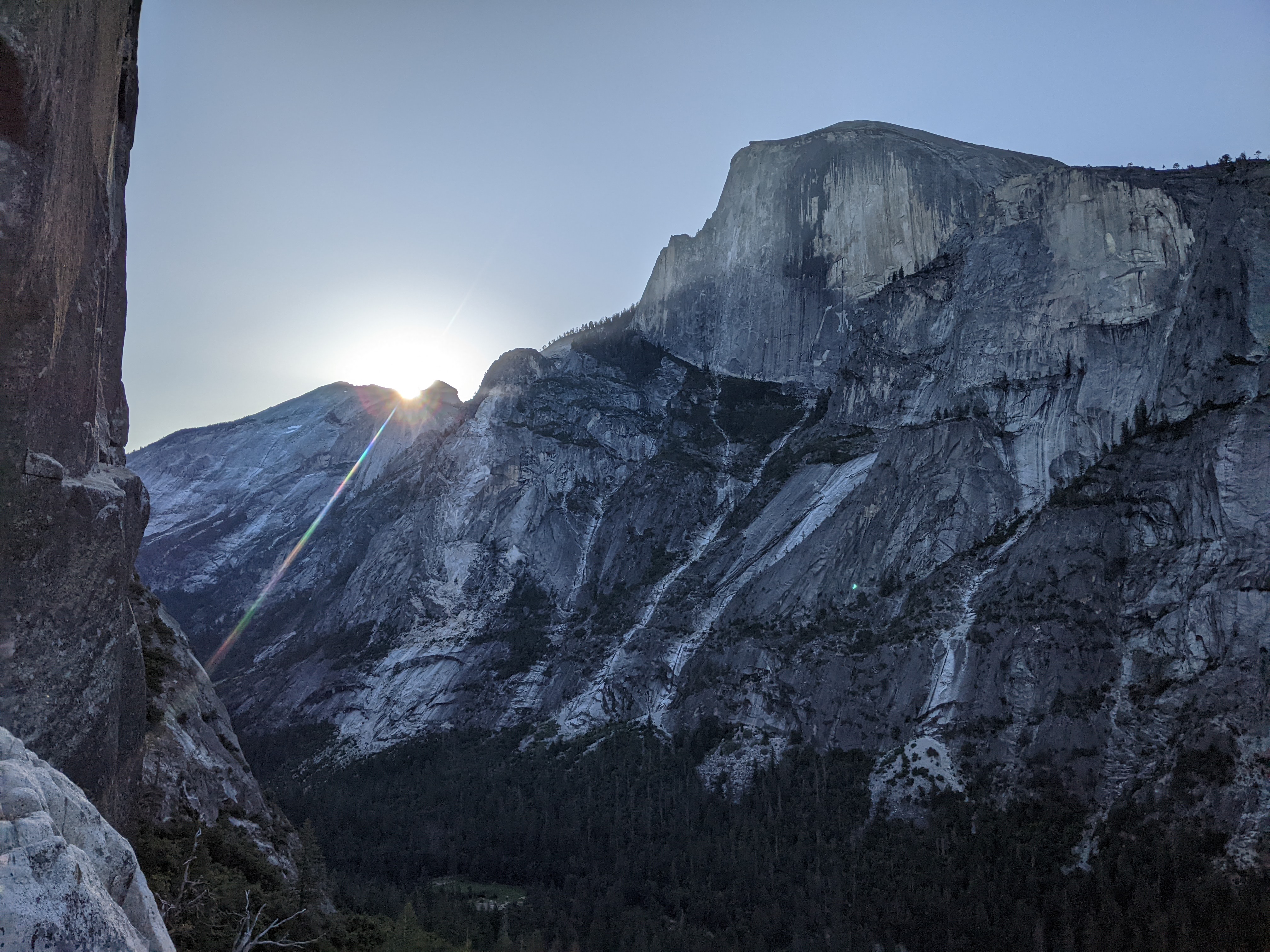
In the morning, we woke up to the sunrise over Half Dome and Clouds Rest.
We made oatmeal for breakfast, packed up camp, and got ready to start climbing again. Chris led pitch 4, which contains the Kor Roof, one of the famous features of this climb. The Kor Roof is a 4-bolt bolt ladder going over a steep roof above Dinner Ledge.
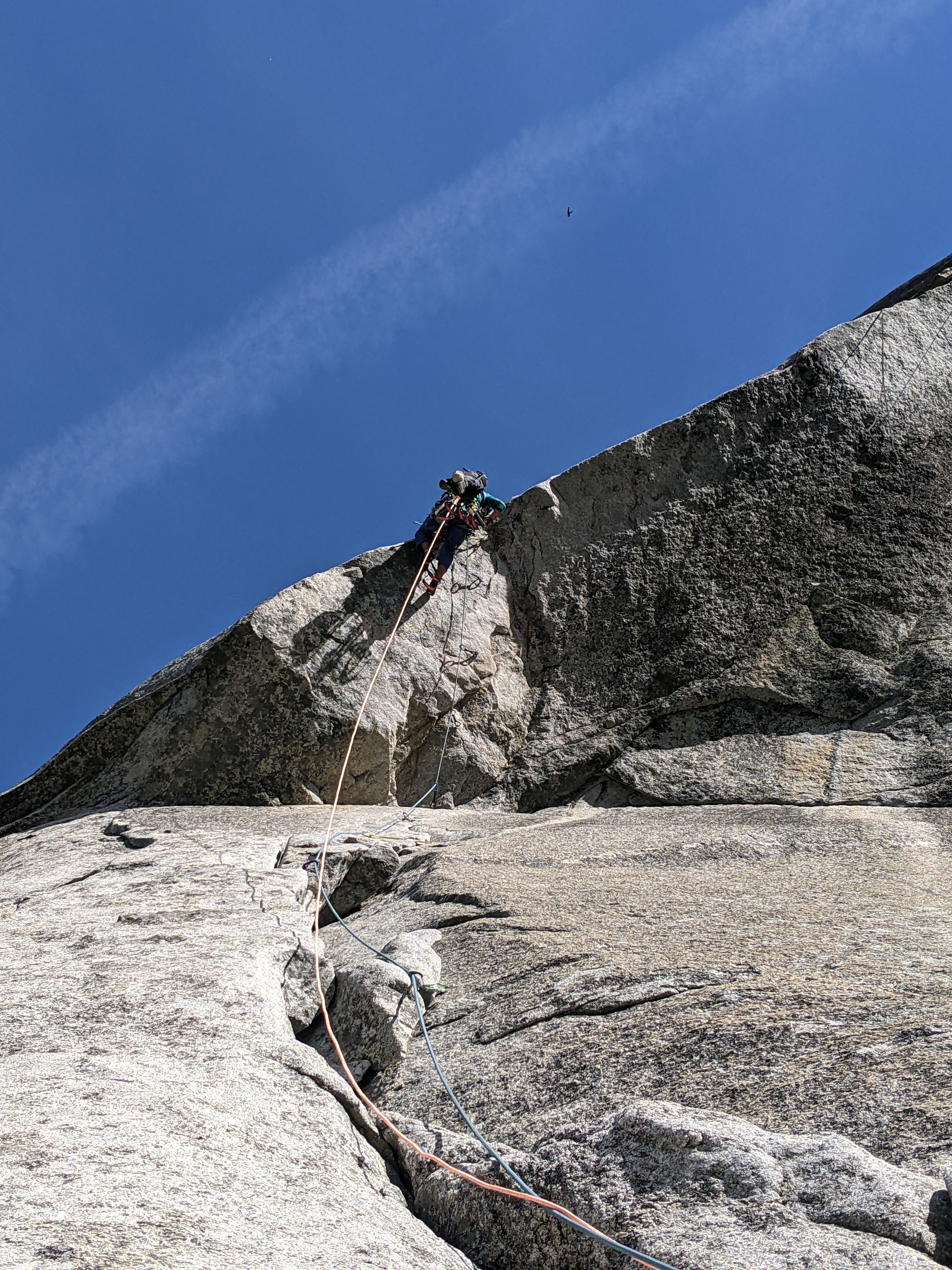
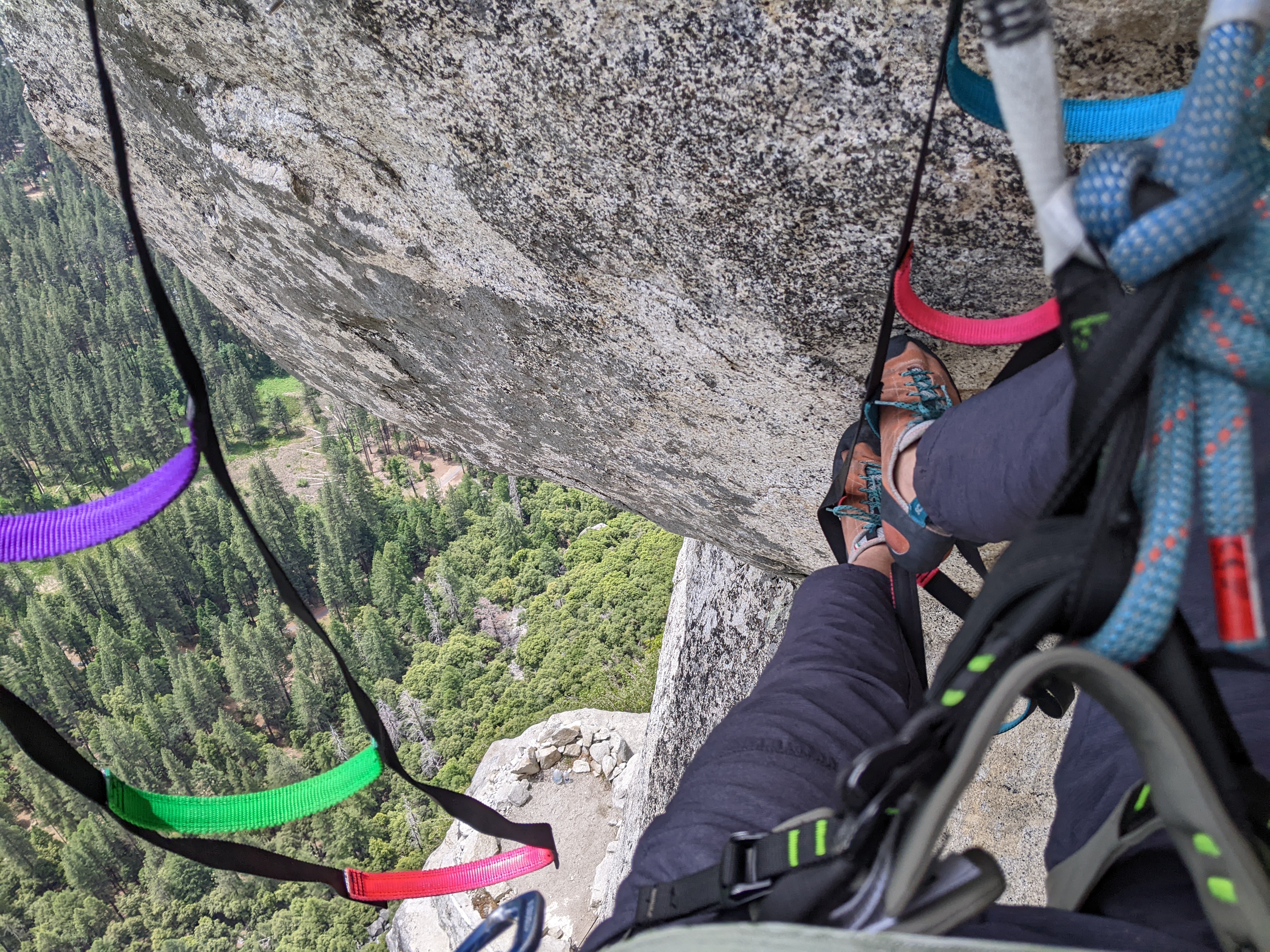
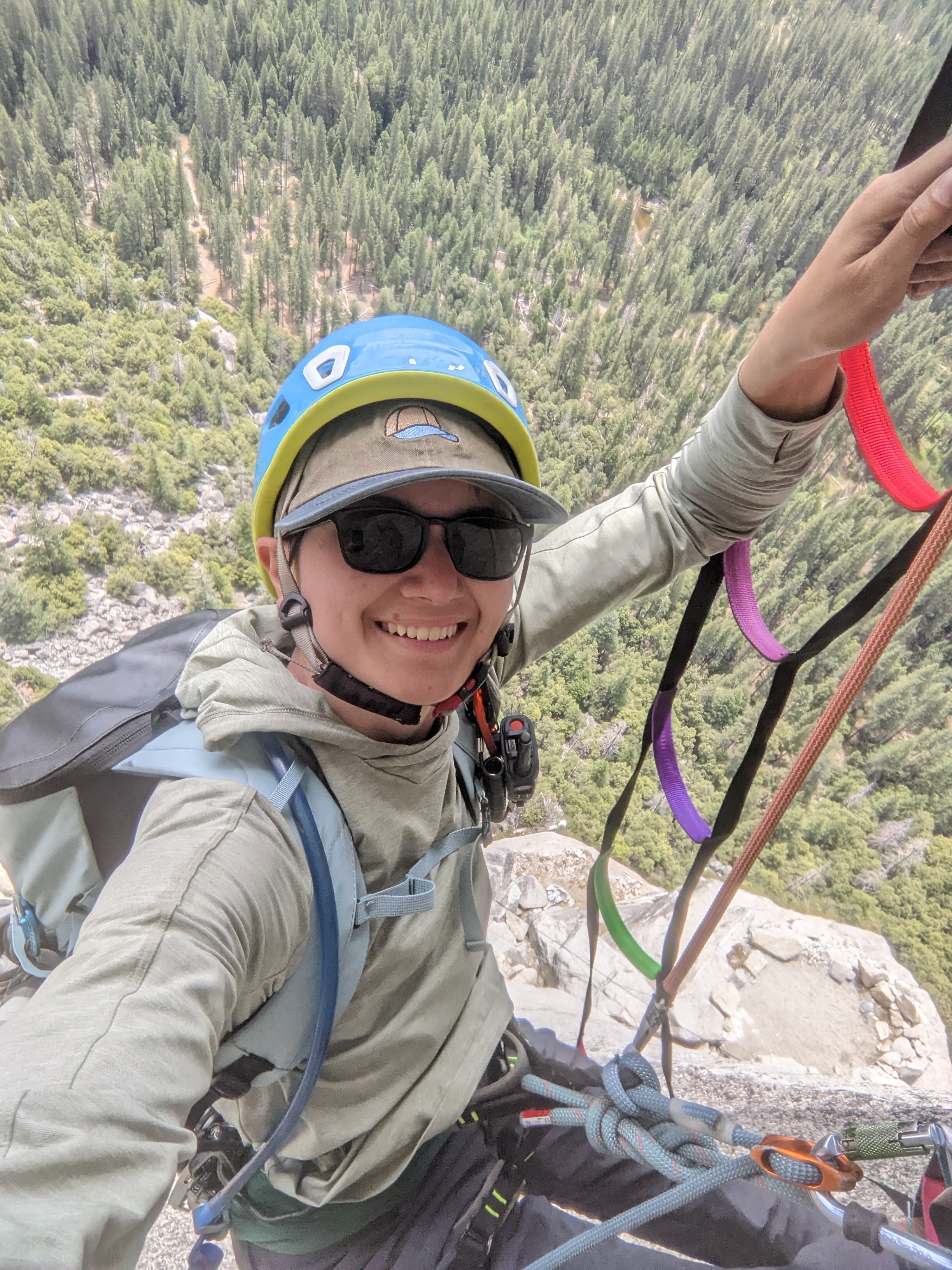
After the Kor Roof pitch, Chris led pitch 5, which involved another small roof, some thin moves, and then a big traverse to the left. The traverse required us to use another big walling technique for the first time. As the leader, Chris had to do a pendulum on a bolt on the traverse, and as the follower, I had to do a “lower out” on the rap ring. The details are a bit too complicated to go into here, but it was pretty interesting to execute.
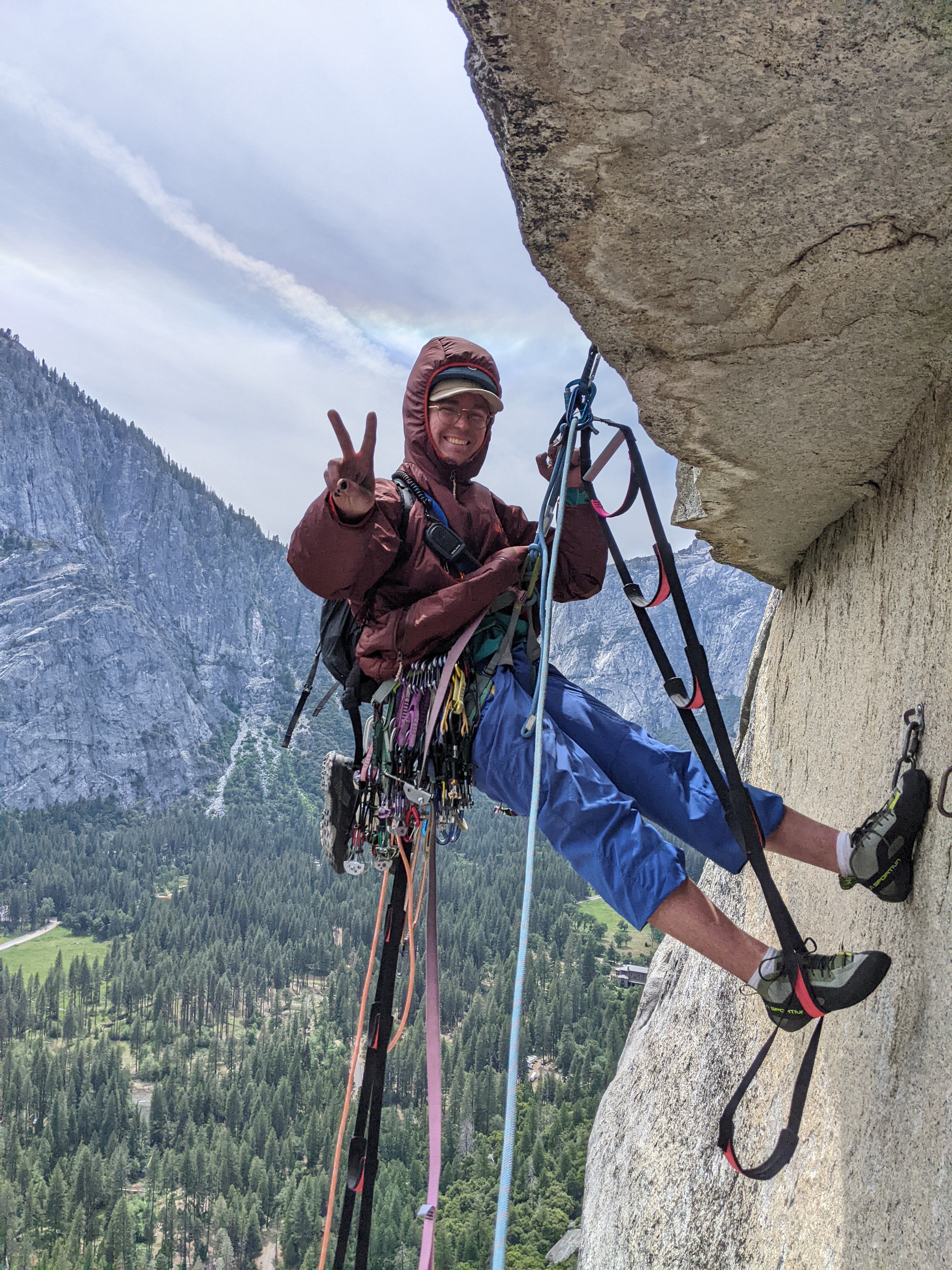
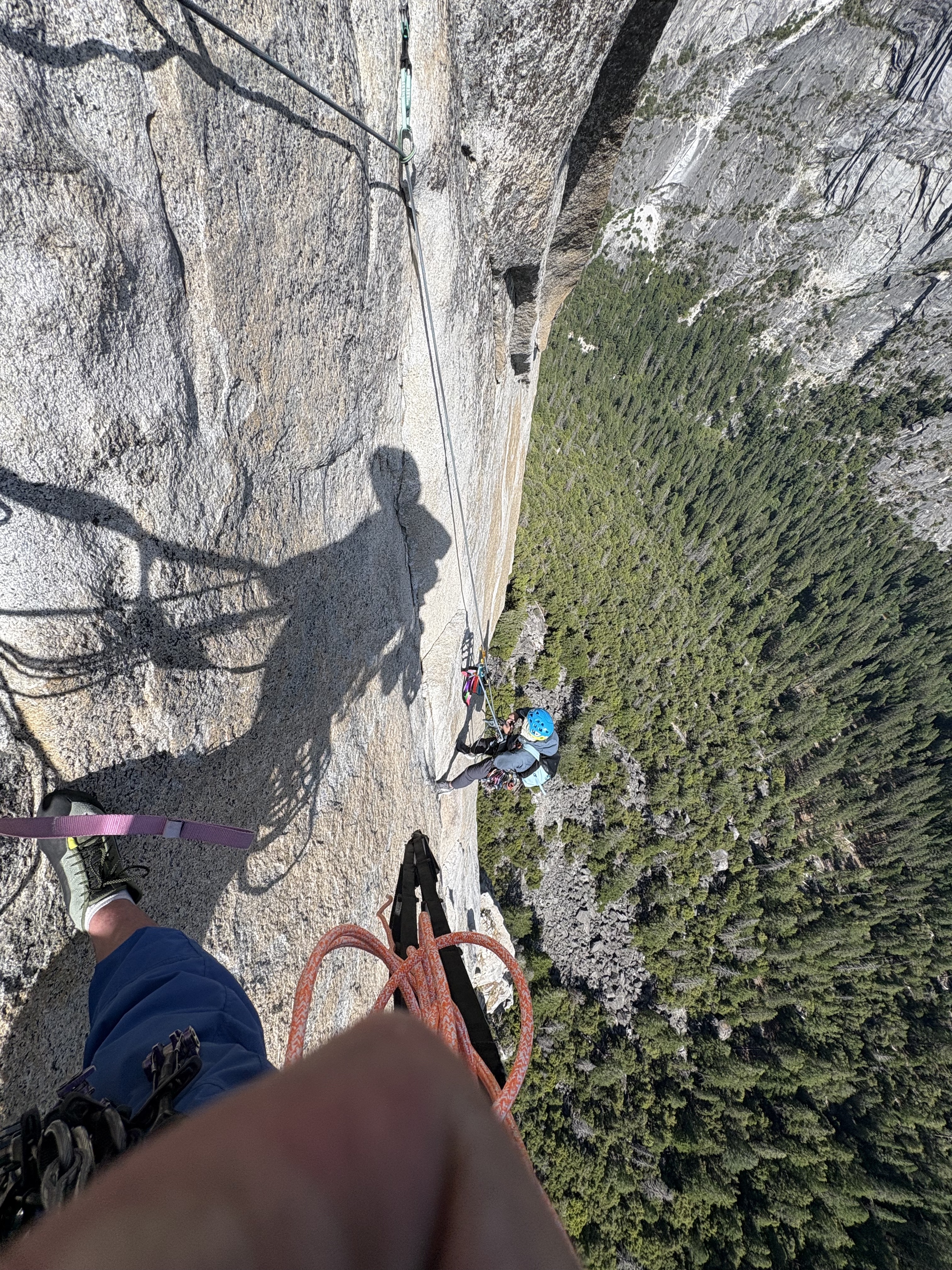
At this point, it was quite windy and the wind was blowing our ropes (and ourselves) everywhere. My leg was also hurting from the previous day’s bruise. It was pretty clear we were not going to make it to the top of the wall, so we decided to head down.
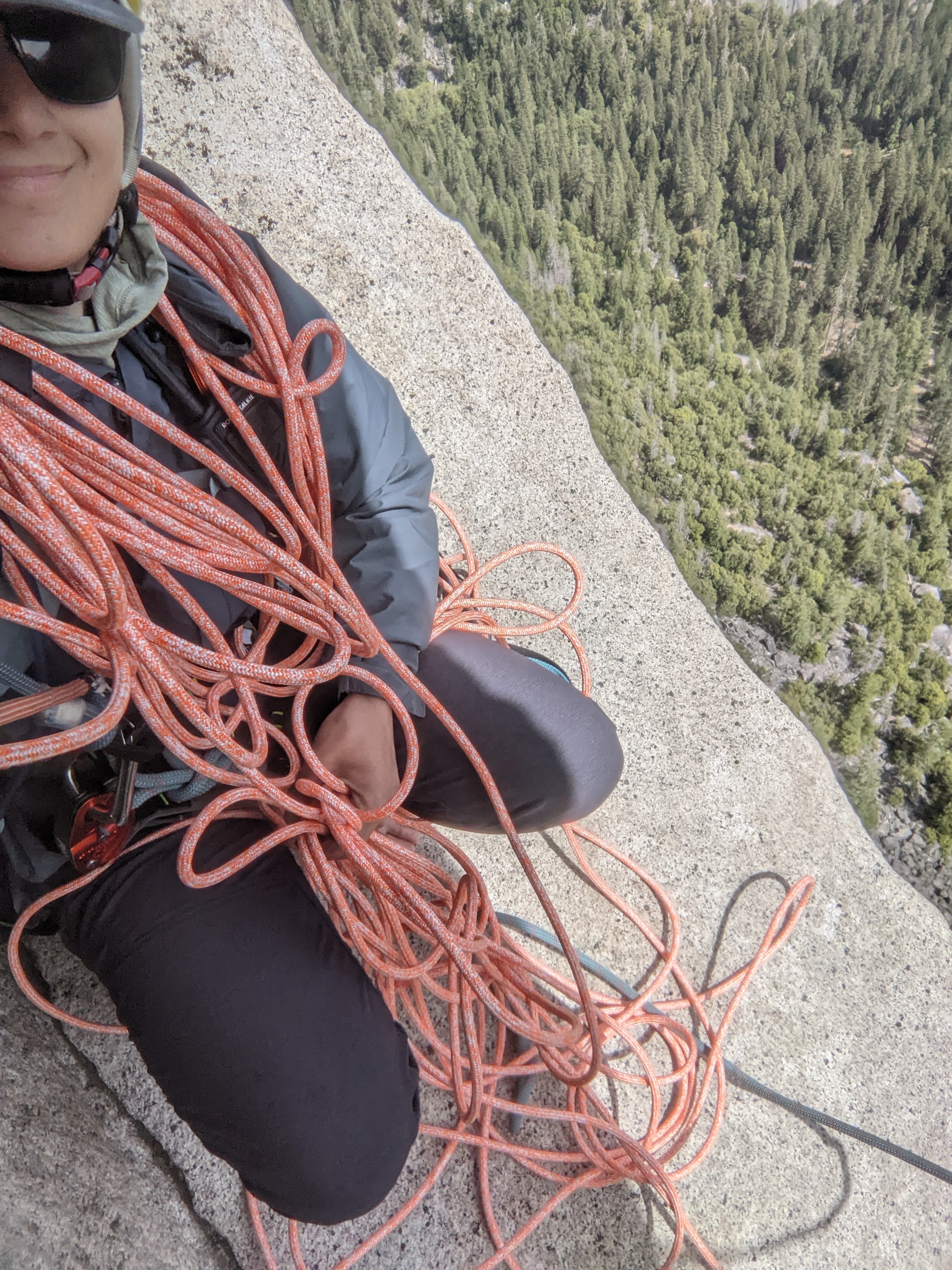
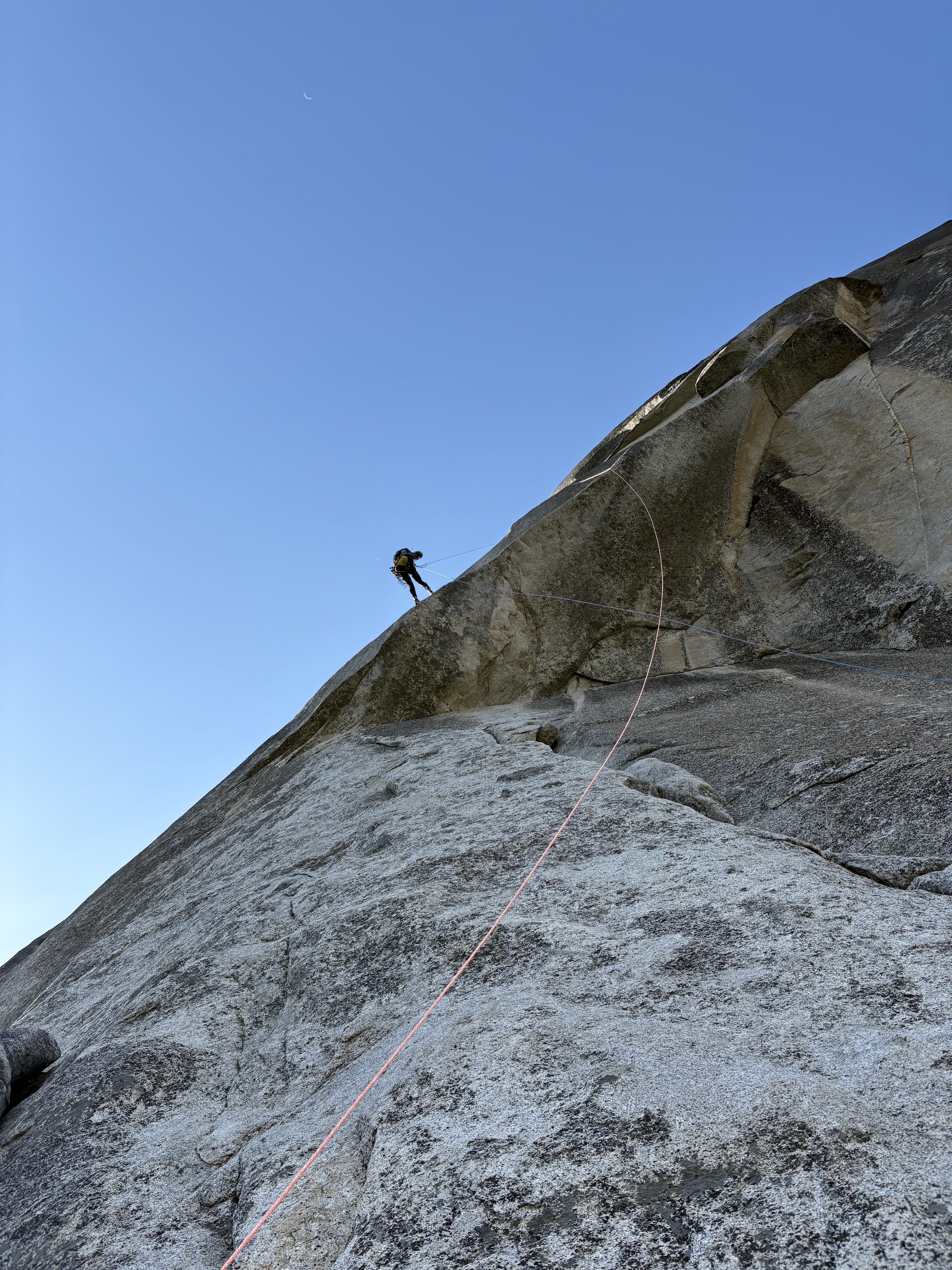
The rappel was pretty straightforward and speedy, especially given that the rappels for pitches 2+3 were fixed, so we could just hop on with our grigris and zip down. Then we walked back to Curry Village for some pizza!